Tenerife Weather Guide: Best Time to Visit the Canaries
Tenerife Canaries weather is one of the most reliable sources of year-round sunshine in Europe, and that reputation is well earned. The largest of the Canary Islands sits just off the northwest African coast, giving it a climate that stands apart from anything else the Atlantic has to offer. Whether you're browsing Tenerife package deals from UK airports or still deciding which month makes most sense for your trip, this guide walks you through everything: monthly averages, the north-south microclimate split, sea temperatures, and practical advice on calima and storms. By the end, you'll know exactly when to go and what to pack.
The Canary Islands earn their reputation honestly. Unlike southern Spain or Greece, where summers scorch and winters go cold and grey, Tenerife maintains a gentle, near-constant warmth. That consistency is not luck; it's geography and atmospheric physics working together in your favour.
Why Tenerife has one of Europe's most reliable climates
Tenerife sits at roughly 28 degrees north latitude, close enough to the equator to stay warm but far enough from the tropics to avoid oppressive humidity. The Atlantic Ocean surrounds it on all sides, acting as a giant thermal buffer. The sea warms slowly and cools slowly, which means the air above it stays mild throughout the year. Mainland Spain swings between fierce summer heat and cold, wet winters; Tenerife barely notices the change of season by comparison.
The northeast trade winds are the other half of the story. They blow consistently across the island, and the way they interact with the terrain shapes two very different weather experiences in the same place. The trade winds carry moisture from the Atlantic and deposit it on the northern slopes, where clouds form and linger. The south, sitting in the wind shadow created by Mount Teide and the island's central ridge, stays dry and clear. This north-south divide is the single most important thing to understand before you choose where to stay, and we'll return to it in detail shortly. The south coast typically sees around 2,800 sunshine hours annually, placing it among the sunniest destinations in Europe.
Tenerife Canaries weather month by month: what to actually expect
The figures below refer to the south coast unless stated otherwise, since that's where the vast majority of UK visitors stay. Think Los Cristianos, Playa de las Américas, and Costa Adeje.
Winter months: November to February
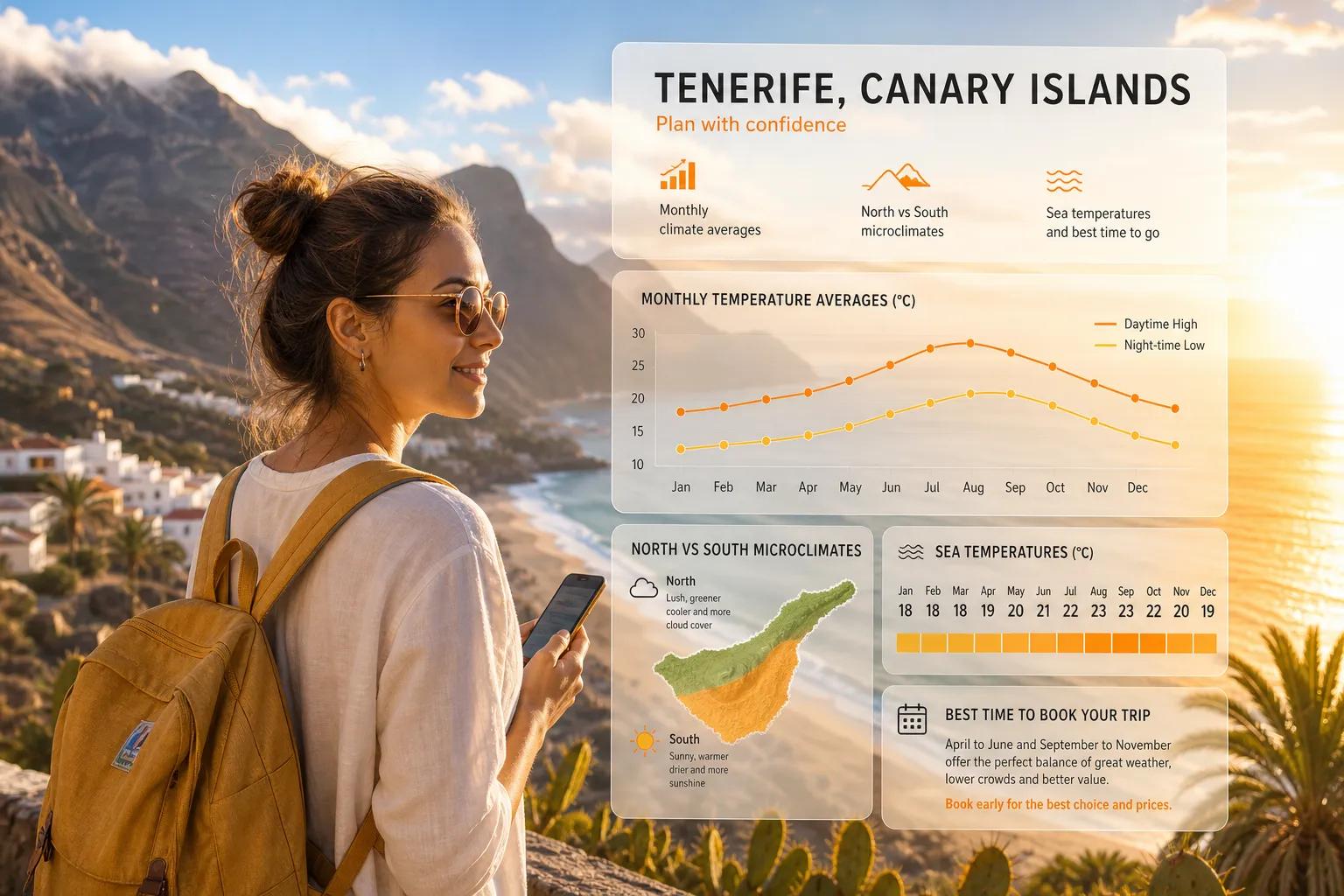
This is where Tenerife firmly earns its "winter sun" label. Average temperatures on the south coast sit between 18.5°C and 19.6°C across these four months, with December's 30 mm being the peak rainfall total for the entire year. Put that in perspective: the UK receives more rain in a typical summer week than the Tenerife south coast sees in its wettest month. Sunshine averages around 6.5 to 7.5 hours per day, which is more than enough for sunbathing by UK standards. The north coast tells a different story: December there averages 75 mm of rain against the south's 25 mm, and the landscape is noticeably greener and more overcast.
Spring months: March to May
Spring is one of the best-kept secrets for a Tenerife trip. Temperatures climb gently from around 19.2°C in March to 20.7°C by May, rainfall drops to near zero, and daily sunshine rises from 8 hours to 8.5. The crowds that descend in July and August are absent, prices are noticeably lower, and the weather is comfortably warm without the intense UV of midsummer. May half-term falls squarely in this sweet spot: reliably warm, uncrowded, and still excellent value for families who can travel during the school break.
Summer months: June to August
June to August delivers the most sunshine Tenerife offers, ranging from 9 hours per day in June to 10 in July. South coast temperatures peak at around 24°C to 24.9°C, and rainfall is essentially zero. This is peak season, so it comes with peak-season crowds and prices. UV intensity is high, so factor SPF 50 into your packing, particularly if you're travelling with children. One weather risk unique to summer is calima, the Saharan dust event that can roll in on easterly winds; more on that in a later section.
Autumn months: September and October
September is arguably the month Tenerife does best. Air temperatures stay at around 24.5°C, the sea is at its warmest of the year (23 to 24°C), rainfall is still very low at just 5 mm, and the summer crowds have thinned considerably. October sees a slight uptick in rain (15 mm) and a gentle cooling, but average temperatures are still a very comfortable 23.5°C with 7 hours of sunshine per day. For couples and travellers without school-age children, September and October represent the strongest combination of warm weather, calm seas, and reasonable pricing.
North vs south Tenerife: how microclimates change your holiday
Choosing where to stay is not just a matter of taste; it's a weather decision. The temperature gap between north and south coast averages roughly 5 to 7°C, with December showing the north at 12.9°C and the south at 19.5°C. For a family hoping to spend most of the holiday on sunbeds, the south is the clear choice. The north suits travellers who prioritise lush scenery, local culture, and hiking in cooler conditions.
The south coast: warm, dry, and arid
Weather along the south coast is characterised by a dry, semi-arid landscape that looks quite different from the verdant northern slopes. Rainfall across the year totals around 125 mm in the south, spread thinly across the wetter months. The terrain can look stark, but the sun is consistent, the beaches are excellent, and the resort infrastructure is built around exactly the kind of holiday most UK visitors are after. Tenerife South airport (TFS) handles most UK arrivals, and it's also generally less disrupted by storms than its northern counterpart.
The north coast: greener, cloudier, and more changeable
The north coast picks up significantly more rainfall: 60 mm in January against the south's 15 mm, 75 mm in December against 25 mm. Santa Cruz de Tenerife and UNESCO-listed La Laguna sit in this zone, along with Puerto de la Cruz. If you want to experience the real Tenerife beyond the resort belt, the north rewards exploration. Just pack a waterproof layer, particularly between October and February.
Altitude and the Teide factor: a completely different world
Mount Teide reaches 3,715 metres, and the temperature drop as you climb is roughly 1°C per 100 metres of altitude. On a warm February day when the south coast is sitting at 20°C, the Teide summit can be at -10°C with ice on the ground. Teide National Park is closed most winters during heavy snowfall, with December through March being the most likely closure months and February carrying the highest risk of serious disruption. Snow can fall as early as October in unusually cold years. Whatever season you visit, bring a proper warm layer for any Teide excursion: it's not optional.
Tenerife Canaries weather: sea temperatures and best months for swimming
The sea around Tenerife is swimmable year-round by most British standards. In January and February, water temperatures sit at around 18 to 19°C, which is warmer than many UK beaches manage in August. From June onwards the sea crosses the 21°C mark, and it stays warm well into autumn. September and October offer the warmest water of the year at 23 to 24°C, genuinely Mediterranean-level warmth.
The practical swimming season in the most comfortable sense runs from June through October, but visitors from the UK often find the water perfectly acceptable from April onwards. One underrated advantage of an autumn Tenerife trip is that the sea has been absorbing heat all summer, so October's water temperature (around 23°C) is actually warmer than July's (around 22°C). Combine that with fewer families on the beach and lower package prices, and the case for September or October becomes very strong indeed.
The best time to visit Tenerife for families, couples, and budget travellers
Best time for families with school-age children
July and August deliver the highest temperatures, most sunshine, and warmest sea, which is why they're peak family season. The trade-off is price and crowds: summer packages are significantly more expensive than any other time of year. May half-term and October half-term are excellent alternatives, offering very similar weather, warmer seas in the case of October, and noticeably lower costs. If your children are young enough that school terms don't dictate your dates, March and April offer particularly good value.
Best time for couples and flexible travellers
September stands out clearly for couples and those without fixed school commitments. The warmest sea of the year, air temperatures in the mid-twenties, fewer families, and a more relaxed atmosphere across the resorts make it a markedly superior experience to the peak summer weeks. March and April are also worth considering, particularly for walking holidays or anyone who prefers exploring over beachside relaxation.
Getting the best value on a Tenerife package holiday
Shoulder months consistently deliver the best price-to-weather ratio. March, April, October, and early November all offer good conditions at lower costs than peak summer. Travelling mid-week and departing from a regional UK airport rather than London can reduce the total cost further. Over 18 UK airports now offer direct flights to Tenerife South, including Manchester, Birmingham, Bristol, Edinburgh, Glasgow, Leeds Bradford, and Belfast, so there's rarely a need to travel south to find a competitive departure point. Comparing Tenerife package deals across UK departure airports is straightforward through Broadway Travel, which bundles flights and accommodation into a single price so you can see the true cost upfront before committing.
Calima, storms, and what to pack: the practical weather checklist
What is calima and how does it affect a Tenerife holiday?
Calima is a weather event in which easterly winds carry fine Saharan dust across the Atlantic to the Canary Islands. Visibility drops, temperatures rise, and a pale orange haze settles over the island. Surfaces, including sun loungers and car windscreens, get coated in dust. Most calima episodes last between one and four days, though severe events can stretch to a week. They occur throughout the year but are most common in late summer and autumn, with August and November seeing the most frequent episodes. If you're travelling between July and October, check the AEMET calima forecast in the days before you fly, it's the most reliable source for Tenerife weather forecasts and current conditions.
Storm season and travel disruption: what you need to know
Tenerife's 2026 storm season provided a useful reminder that winter weather can cause real disruption. January brought yellow wind warnings and high-sea alerts across the island, affecting coastal transport. In March, Storm Therese triggered flight cancellations at Tenerife North Airport, forced a Binter Canarias service to turn back, closed the road to Punta de Teno, and shut Teide National Park due to snowfall above 1,800 metres. These events are short-lived but disruptive. If you're travelling between November and March, monitor AEMET alerts and check your airline's status before heading to the airport. Tenerife South airport is generally less affected by storm disruption than the north.
What to pack based on where and when you're going
- South coast in summer: lightweight clothing, SPF 50 sun cream, a wide-brim hat, and a UV rash vest for swimming.
- South coast in winter: the same light clothing works for daytime, but pack a warmer layer for evenings and one light jacket for cooler nights.
- North coast or La Laguna at any time of year: add a waterproof outer layer and an extra jumper.
- Teide visit, regardless of season: a proper warm jacket, gloves if you're going to the summit, and sturdy footwear. The coast may be 25°C while the summit sits at -5°C on the same afternoon.
Plan your Tenerife trip with confidence
Tenerife's climate is among the most dependable in Europe, and the south coast delivers reliable sunshine in every month of the year. The data makes clear that there is no truly bad time to visit. Winter brings warmth when the rest of Europe is grey; spring offers ideal temperatures without the crowds. Book in summer for maximum sun and sea, or choose autumn for the warmest water of the year at prices that undercut the peak season considerably. The only meaningful variable is what you want from the trip and which trade-offs you're willing to make.
For families, July, August, and the half-term windows in May and October are the natural picks. For couples and flexible travellers, September and October represent the strongest all-round package, while March and April offer excellent spring value. With Tenerife Canaries weather this consistent, you can choose your dates around crowds and cost rather than worrying about the climate.
If you're ready to move from planning to booking, get in touch with the Broadway Travel team or browse Broadway Travel's current Tenerife package deals, which cover departures from regional airports across the UK. We'll help you find the right departure date, the right resort, and the right price for the holiday you're after.